
Published
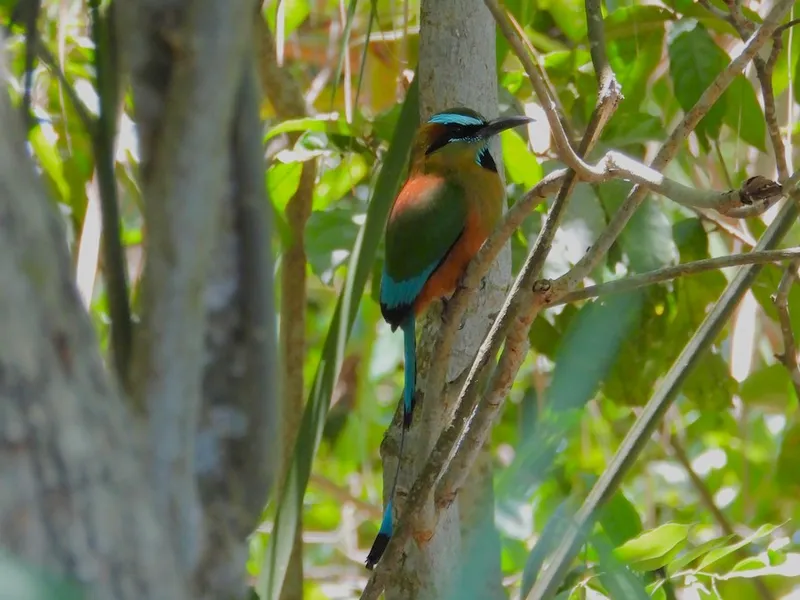
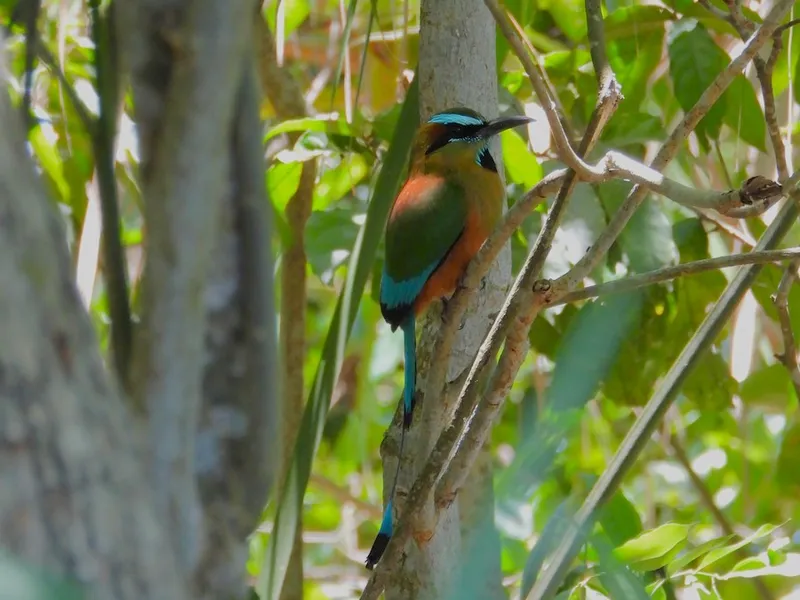
Turquoise-browed Motmot with stunning irridescent plumage watches from within the brush (Photo: Gabriel Hernandez)
Dates: April 29–30, 2025
Locations Visited:
- Parque Nacional Palenque
- Planta de Tratamiento de Aguas Residuales Palenque
- Camino a Cuyo, Catazajá (Jagüey and surrounding wetlands)
- Catazajá: Puente La Chigua
- Catazajá: Terracería Chablé
- Laguna de Catazajá
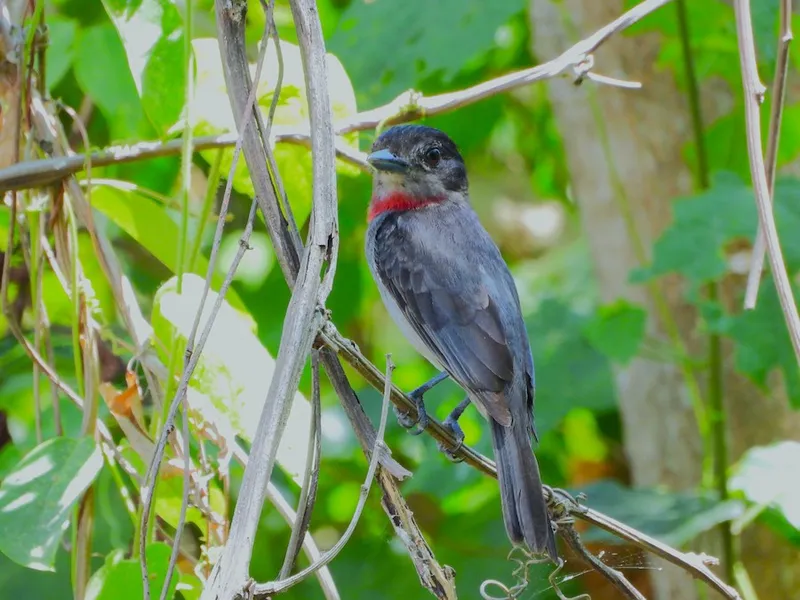
A Rose-throated Becard protecting its nest casts an eye over our party (Photo: Gabriel Hernandez)
Overview
Two days of birding across the Palenque and Catazajá regions delivered an outstanding mix of resident tropical species, migratory warblers, and wetland specialists. From the lush forests of Palenque to the expansive marshes of Catazajá, we recorded 127 species, including several rarities and regional targets. Highlights included Scarlet Macaws, Pinnated Bittern, Yellow-headed Amazon, Double-striped Thick-knee, and a Black Hawk-Eagle, alongside a strong showing of northbound migrants.
Stop 1: Parque Nacional Palenque
Date: April 29, 2025
Time: 6:21 AM – 9:42 AM
Species recorded: 69
Checklist: View on eBird
The morning began with a chorus of trogons, toucans, and oropendulas in the humid forest. Mixed flocks moved actively through the canopy, offering a blend of residents and migrants:
- Trogon duo: Both Black-headed Trogon and Gartered Trogon showed well, the latter with its striking violet eye-ring.
- Aracari & Toucan: A Collared Aracari and two Keel-billed Toucans fed in a fruiting tree, their oversized bills silhouetted against the dawn light.
- Scarlet Macaws (2): A pair flew overhead, their vibrant plumage unmistakable—likely part of the local reintroduction program.
- Migrant warblers: A Bay-breasted Warbler (a scarce transient) and multiple Chestnut-sided Warblers foraged in the mid-story.
- Supporting cast: Five woodpecker species, Montezuma Oropendulas, and Red-lored Amazons rounded out a stellar start.
Stop 2: Planta de Tratamiento de Aguas Residuales Palenque
Date: April 29, 2025
Time: 4:23 PM – 6:18 PM
Species recorded: 29
Checklist: View on eBird
The wastewater treatment ponds attracted a mix of waterbirds and passerines:
- Mourning Warbler (1): This skulking migrant is rare even during passage, and this individual showed unusually well in low scrub.
- Eastern Kingbirds (16): A large aggregation hawking insects over the ponds, likely fueling up for their northward journey.
- Northern Jacanas (8): Picked their way through lily pads, their ludicrously long toes on full display.
- Ladder-backed Woodpeckers (2): A dry-country specialist, unexpected here but a welcome surprise.
Stop 3: Camino a Cuyo (Jagüey Wetland)
Date: April 30, 2025
Time: 6:42 AM – 6:52 AM
Species recorded: 6
Checklist: View on eBird
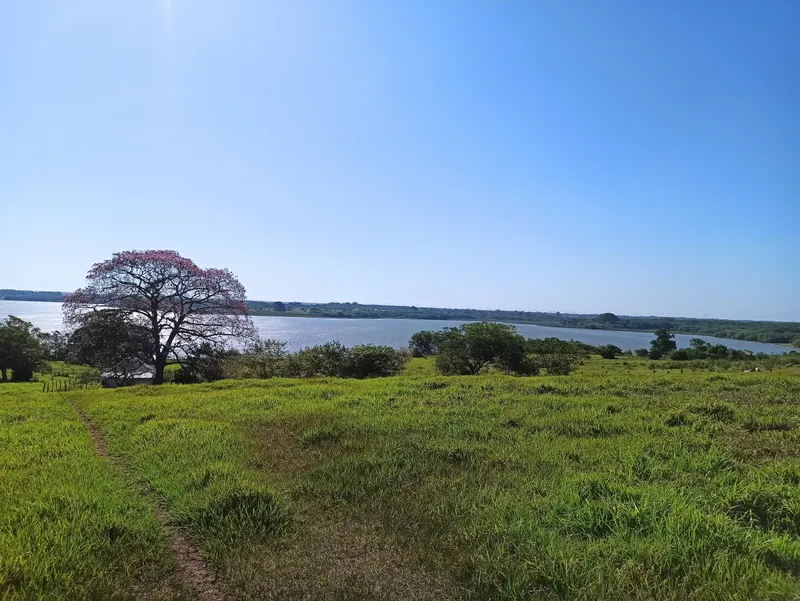
Our view over a lake in Catazaja where a local farmer invited us to visit (Photo: Gabriel Hernandez)
A brief but thrilling predawn stop:
- Double-striped Thick-knee (2): Our primary target! These cryptic nightjars-of-the-grassland stood motionless in the half-light, their glowing eyes giving them away.
- Trip notes: A local farmer stopped to greet us while we watched the Thick-knee and invited us in to see his incredible shared family property covering hundreds of hectares of grassland and lakes.
Stop 4: Camino a Cuyo (Wetland Circuit)
Date: April 30, 2025
Time: 6:45 AM – 8:30 AM
Species recorded: 31
Checklist: View on eBird
The wetlands dazzled with waterbirds and open-country specialties:
- Yellow-headed Amazon (2): A rare and declining species in Mexico, their bright yellow heads shone even at distance.
- Pinnated Bittern (1): An exceptional find—this secretive heron froze in the reeds, its streaked plumage blending perfectly.
- Grassland Yellow-Finch (15): Uncommon in Mexico, these were a regional target, singing from fence lines.
- Roseate Spoonbill (1): A lone pink-and-white wanderer, likely dispersing from coastal areas.
Stop 5: Catazajá – Puente La Chigua
Date: April 30, 2025
Time: 9:15 AM – 9:25 AM
Species recorded: 9
Checklist: View on eBird
A quick bridge stop yielded wetland icons:
- Limpkin (1): Wading with prehistoric grace, its haunting call echoing over the marsh.
- Bare-throated Tiger-Heron (3): Strikingly patterned, one posed atop a snag.
- White Ibis (1): A crisp adult, its scarlet face and curved bill unmistakable.
Stop 6: Catazajá – Terracería Chablé
Date: April 30, 2025
Time: 10:15 AM – 12:25 PM
Species recorded: 31
Checklist: View on eBird
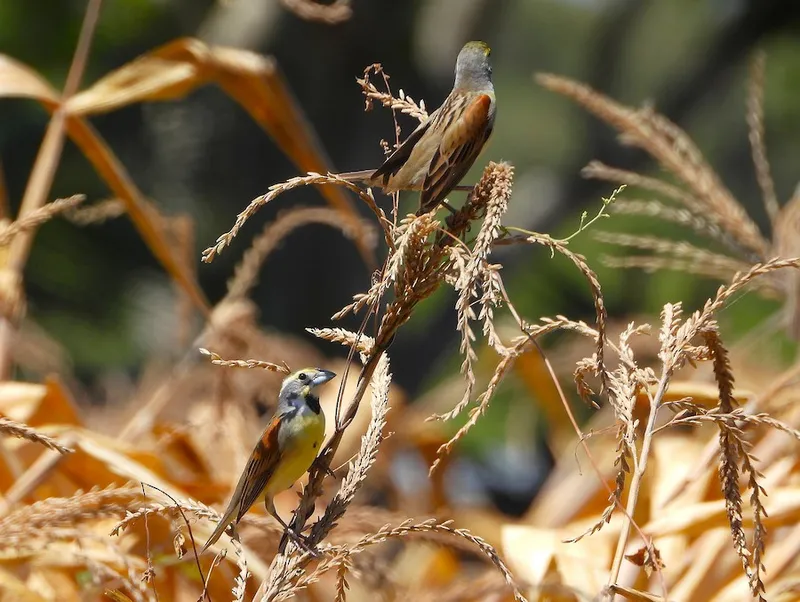
A pair of well-traveled Dickcissels frolick in the fields (Photo: Gabriel Hernandez)
The day's most eclectic mix of habitats delivered standout sightings:
- Black Hawk-Eagle (1): Soared overhead—a powerful raptor rarely encountered, making this a trip highlight.
- Turquoise-browed Motmot (2): Electric blue and rust plumage, their racket-tipped tails swinging like pendulums.
- Dickcissel (15): A large flock of these grassland migrants, their buzzy calls a welcome surprise on their extensive migration path from South America.
- Hooded Oriole (3): A target for Chiapas, their lemon-yellow bodies glowing in the scrub.
Stop 7: Laguna de Catazajá
Date: April 30, 2025
Time: 1:17 PM – 1:45 PM
Species recorded: 19
Checklist: View on eBird
A final lakeside push:
- Black-collared Hawk (2): Our key target—a stunning rusty hunter soaring over the water, eyeing fish.
- Mangrove Swallows (4): Darted low over the lake, their snowy rumps flashing.
- Solitary & Spotted Sandpipers: Picked along the shoreline, bobbing their tails.
Final Thoughts
This two-day blitz underscored the region's incredible biodiversity, from forest giants like macaws to wetland ghosts like the Pinnated Bittern. The mix of resident megafauna and passage migrants—especially the Mourning Warbler and Dickcissel—made for an unforgettable trip. Catazajá's wetlands, in particular, deserve more attention as a Chiapas birding hotspot.
Total species: 125
Checklists: Full eBird trip report